Why this matters
A practical approach to deposit invoices.
A deposit is most useful when it is linked to a real commitment: preparation, reserved capacity, early costs or a project that is difficult to resell.
What to write before the work moves
State the amount or percentage, the trigger, the due date and what must happen before work begins.
The boundary to keep visible
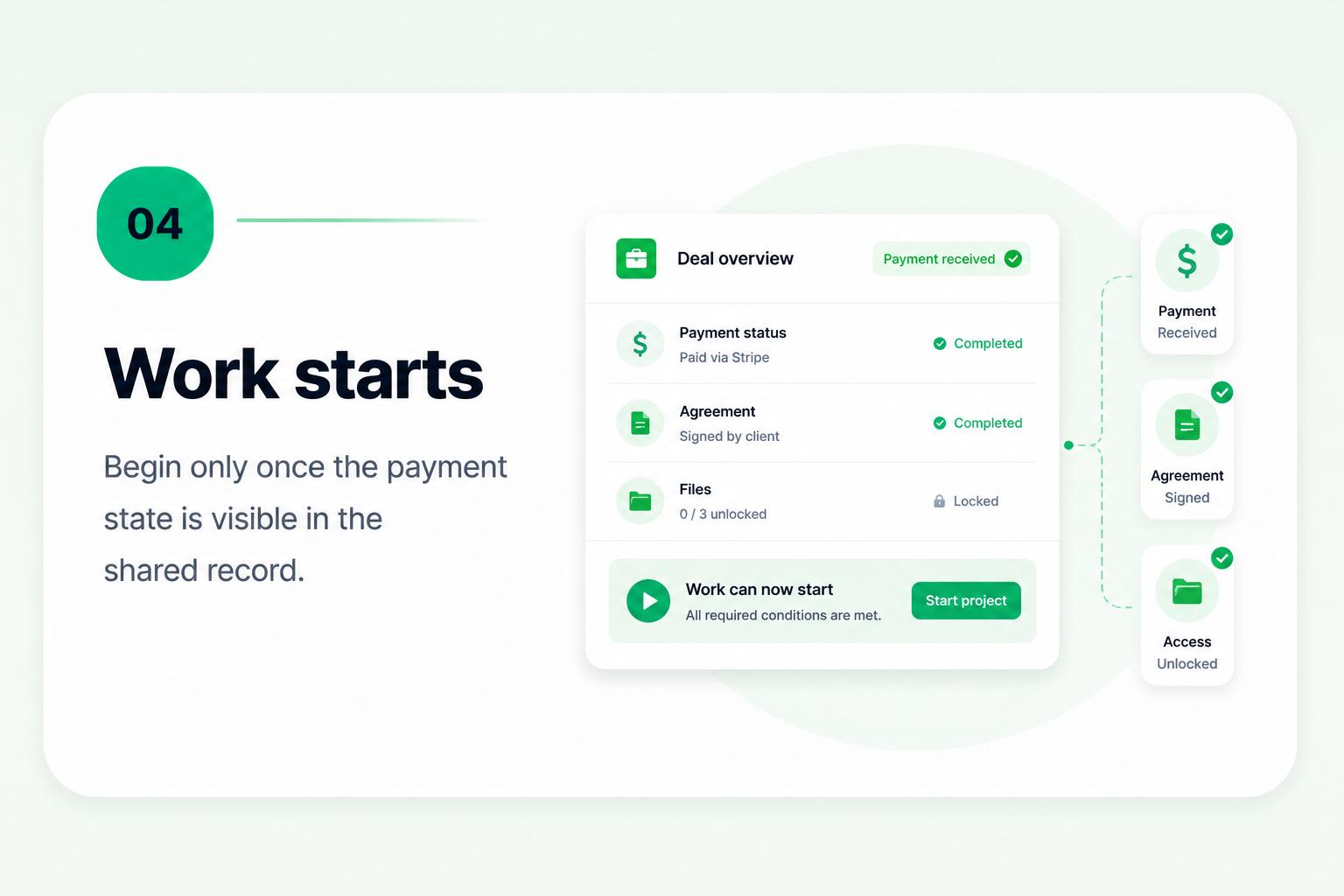
Do not treat a promise of payment as the same thing as a confirmed payment status.
Operational example
Deposit invoice: make the example easy to read
Before sending it, read the document as your client would: what does the deposit cover, what balance remains, and which project step does it unlock? Those three points reduce questions and back-and-forth.
- Match the wording to the project and the planned step.
- Clearly distinguish the deposit from the balance due later.
- Keep the sent document and its date with the project record.